Humanitarian Project Commissioned for Ghana
“We have exciting news!” exclaims Johnny Kraczek, CEO of 5E. “We have been commissioned to take on a truly important, life-changing humanitarian project!”
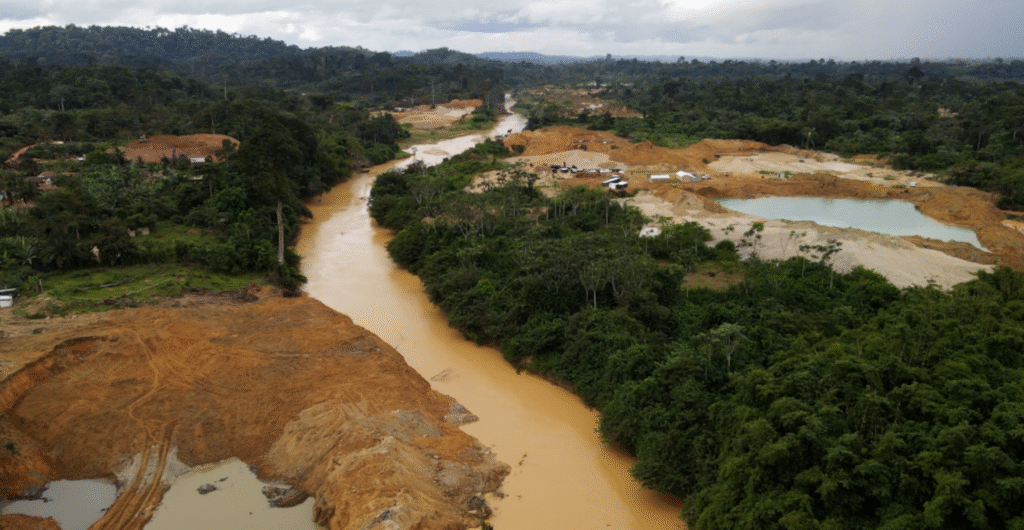
5 Element Energy (5E) has taken on the task of developing a water purification system for various parts of West Africa. The need for this project comes from the alarming rate that the amount of safe drinking water per person is decreasing[1]. According to a 2022 study, 3 out of 5 people in Ghana do not have water on their premises, and 1 out of 5 don’t have access to enough drinking water[2]. Several factors contribute to this shortage, including deforestation and pollution[3], both of which come from unregulated gold mining operations. While trees are cut down to clear the land for these mines, the operations themselves pollute the water with undissolved silt, clay, minerals, and other harmful heavy metals such as arsenic and mercury. This increases the turbidity of the water to levels higher than the water treatment plants were designed to process and often causes the plants to shut down[4]. Even when the plants are operational, heavy metals are not reduced to safe levels.
“My biggest concern for the people of Africa is the unsafe levels of mercury and dimethyl mercury in their drinking water,” expresses Kraczek.
To restore safe drinking water to West Africa, 5E has designed a comprehensive water treatment plan including the use of vacuum distillation. Under vacuum, the water requires less energy to vaporize, allowing for distillation at lower temperatures. An initial demonstration skid made last fall proved the technology’s capabilities which impressed key stakeholders and government representatives who agreed to co-fund a larger demonstration skid. This unit is in construction and fabrication, and it will be shipped to Africa soon.
“We’re excited about this breakthrough water treatment technology that will be used as part of a larger 5E water treatment facility,” Kraczek states. “These new systems should be able to handle anything thrown at them, including highly toxic arsenic- and mercury-laden silts and solutions.”
Some technology companies in the water treatment industry have offered to support the larger initiatives of this project. If you’re interested in helping with this important project, we invite you to contact us or even make a cash donation.